Japanese Sleeve Tattoo Drawings: 12 Epic Designs to Love
Japanese sleeve tattoo drawings are the starting point for some of the most impressive tattoos in the world. A Japanese sleeve wraps the arm in one flowing scene of koi, dragons, tigers, flowers and waves, all tied together by dark wind bars and clouds. It is a big commitment, so a strong drawing is everything.
Below you will find 12 Japanese sleeve tattoo drawings turned into finished full and half sleeves on the arm, from koi climbing waterfalls and coiling dragons to peonies, cranes and guardian foo dogs. Each idea comes with notes on meaning and layout, followed by tips on planning your own sleeve.
Table of Contents
The Roots of Japanese Sleeves
Traditional Japanese tattooing, known as irezumi, grew in the Edo period alongside woodblock prints of heroes, beasts and nature. Its artists learned to design for the whole body, so every element flows into the next. That is why Japanese sleeve tattoo drawings feel like one painting rather than a collection of small pictures.
- Main subject: one large animal or figure that sets the story.
- Supporting motifs: flowers that match the season and the meaning.
- Background: wind bars, waves or clouds that link everything together.
- Flow: the design follows the muscles from shoulder to wrist.
12 Japanese Sleeve Tattoo Drawings on the Arm
Each of these Japanese sleeve tattoo drawings is shown as a finished full or half sleeve on the arm.
1. Koi Climbing the Waves
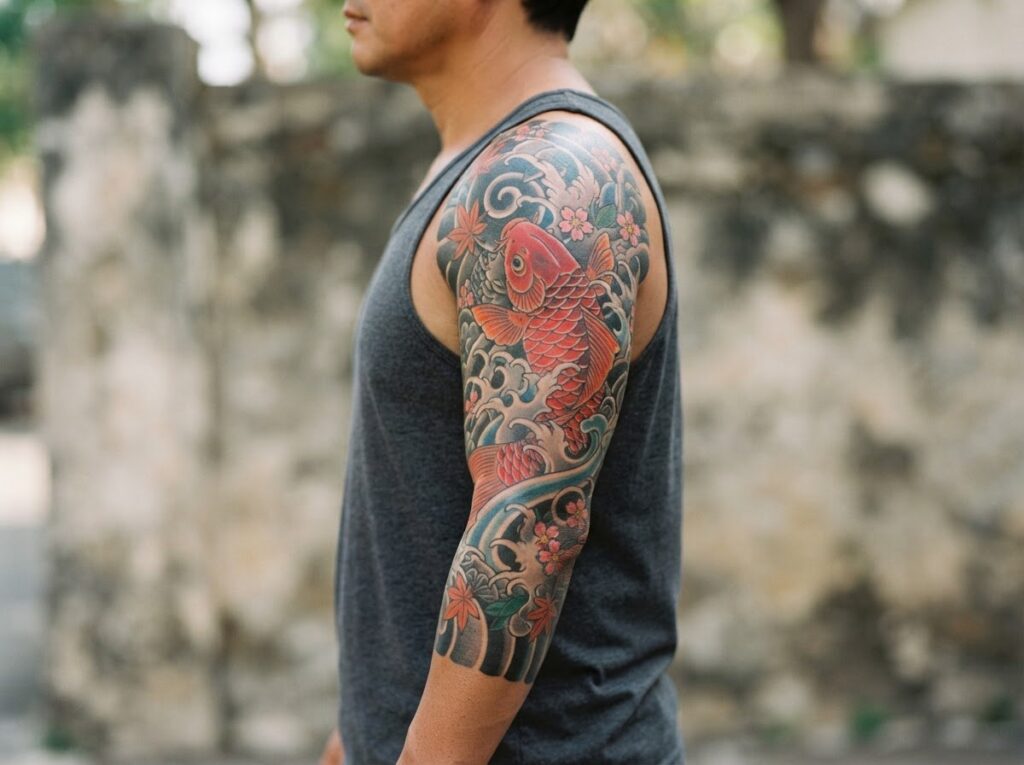
A koi fighting its way upstream stands for strength, patience and success. In this full sleeve the fish swims up the arm through blue waves and wind bars.
2. Dragon Among Clouds
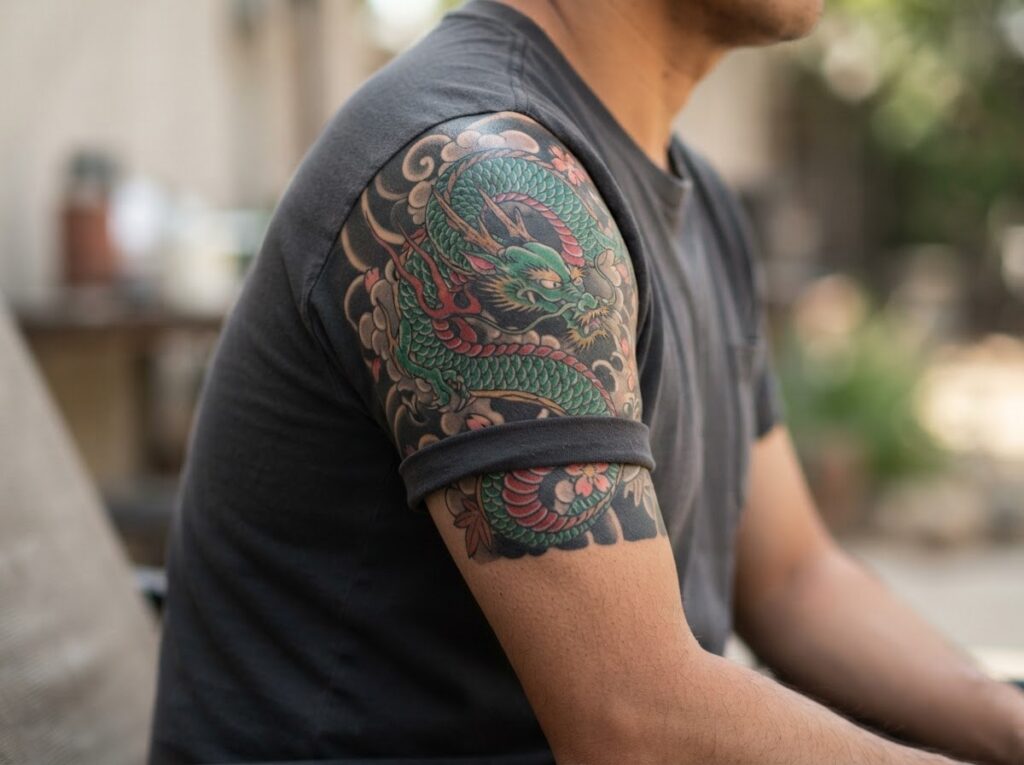
The Japanese dragon is a wise, protective water spirit. Its long body curls around the upper arm and over the shoulder in this half sleeve.
3. Tiger in Bamboo
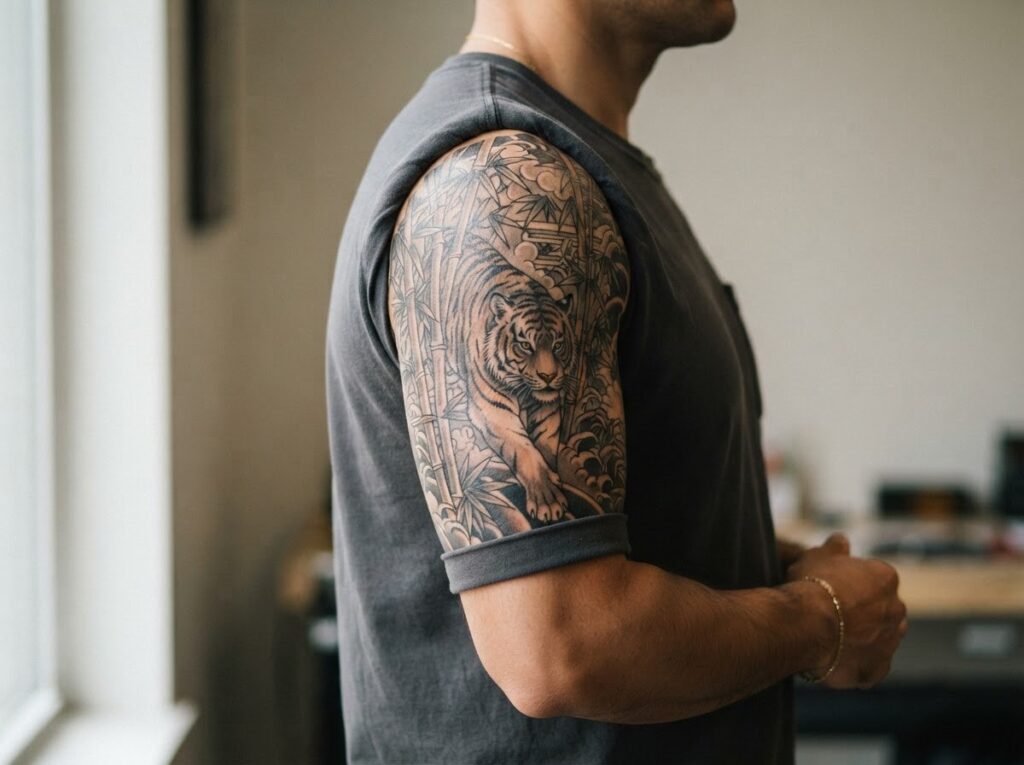
The tiger stands for courage and protection against bad luck and illness. Bamboo stalks give the half sleeve strong vertical lines around the upper arm.
4. Hannya Mask and Peonies
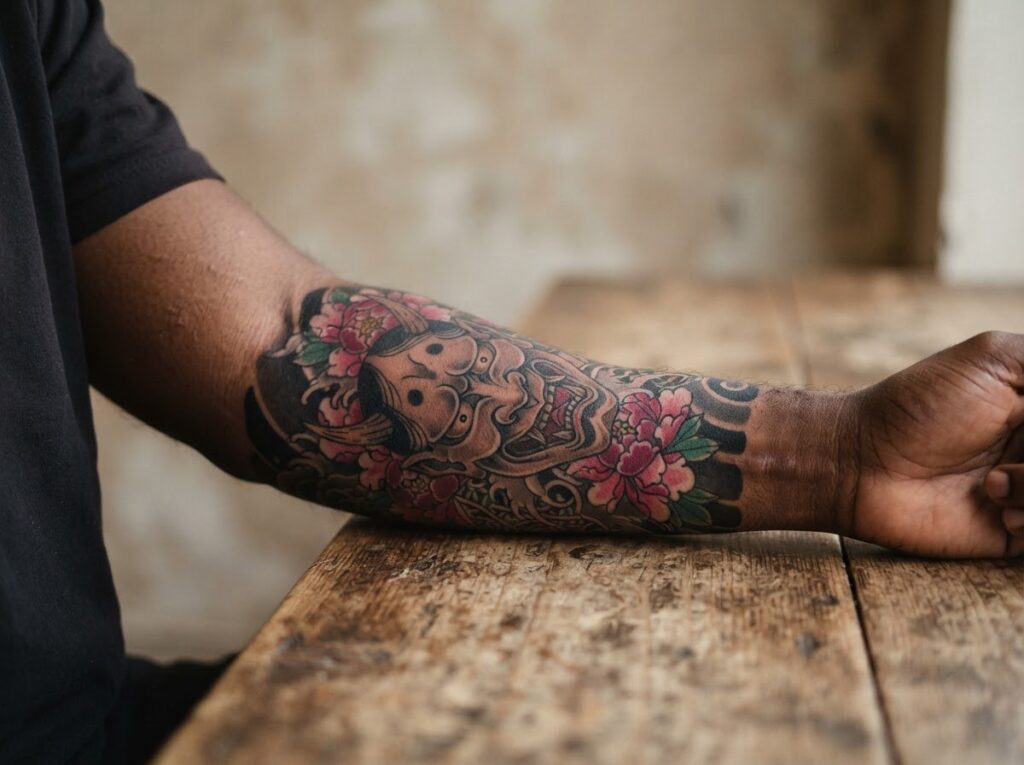
The hannya mask comes from Noh theatre and shows jealousy and sorrow. Framed by peonies and wind bars, it makes a bold lower sleeve on the outer forearm.
5. Rising Phoenix
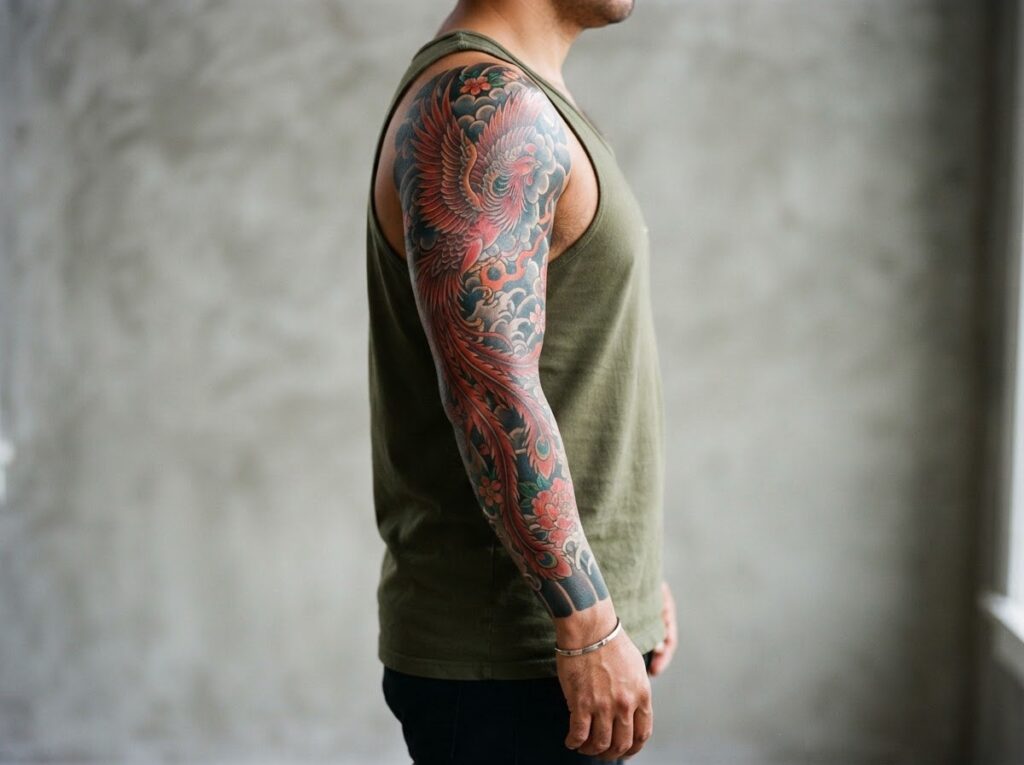
The phoenix is a symbol of rebirth and good fortune. Its long tail feathers stream down the arm in this full sleeve, with the head near the shoulder.
6. Cherry Blossom Branches
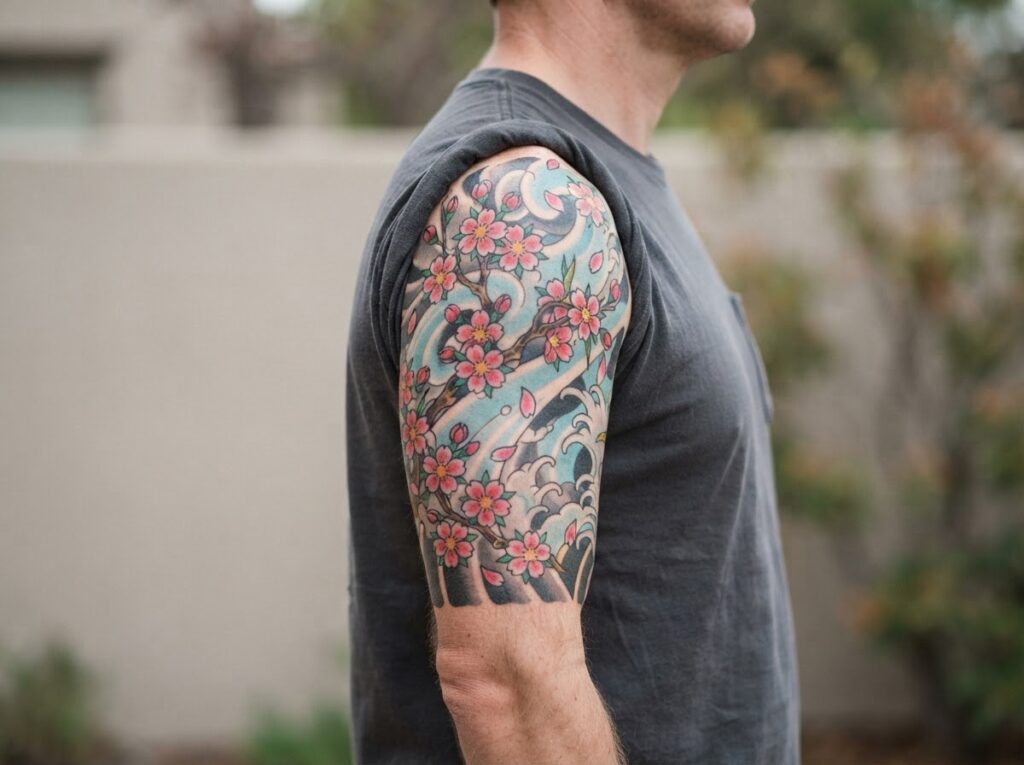
Cherry blossoms are a reminder that life is beautiful and short. Falling petals over pale wind bars make a softer half sleeve on the upper arm.
7. Peonies and Wind Bars
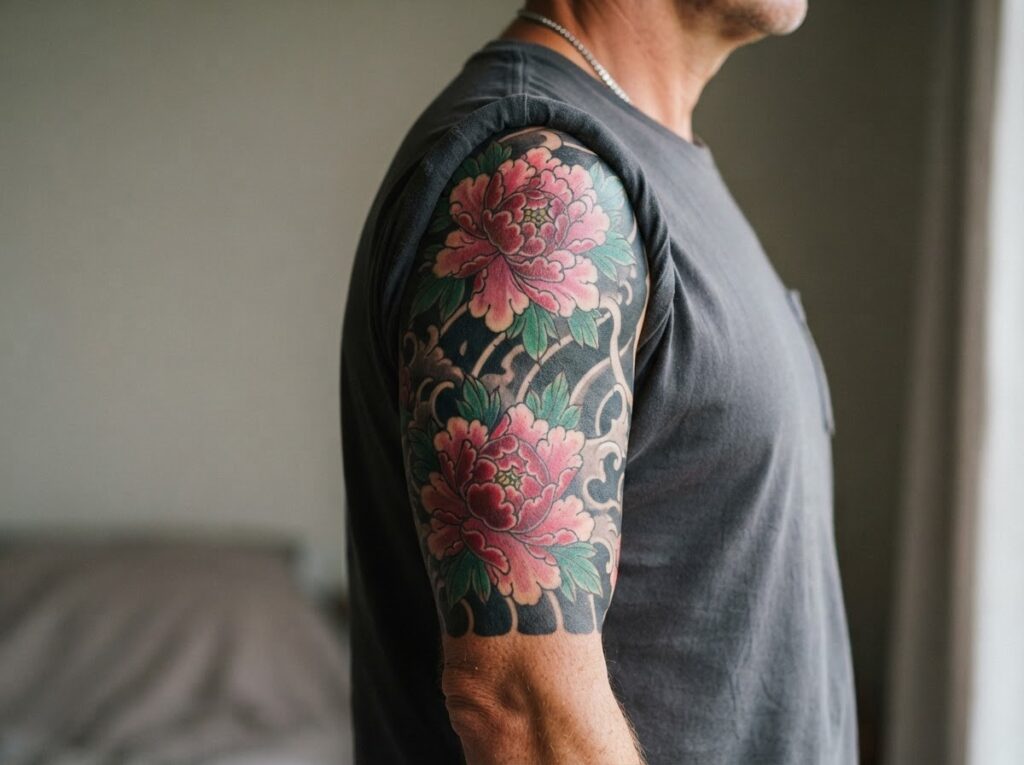
The peony is the king of flowers, linked to wealth, bravery and good fortune. Large blooms make Japanese sleeve tattoo drawings rich with color.
8. Guardian Foo Dog
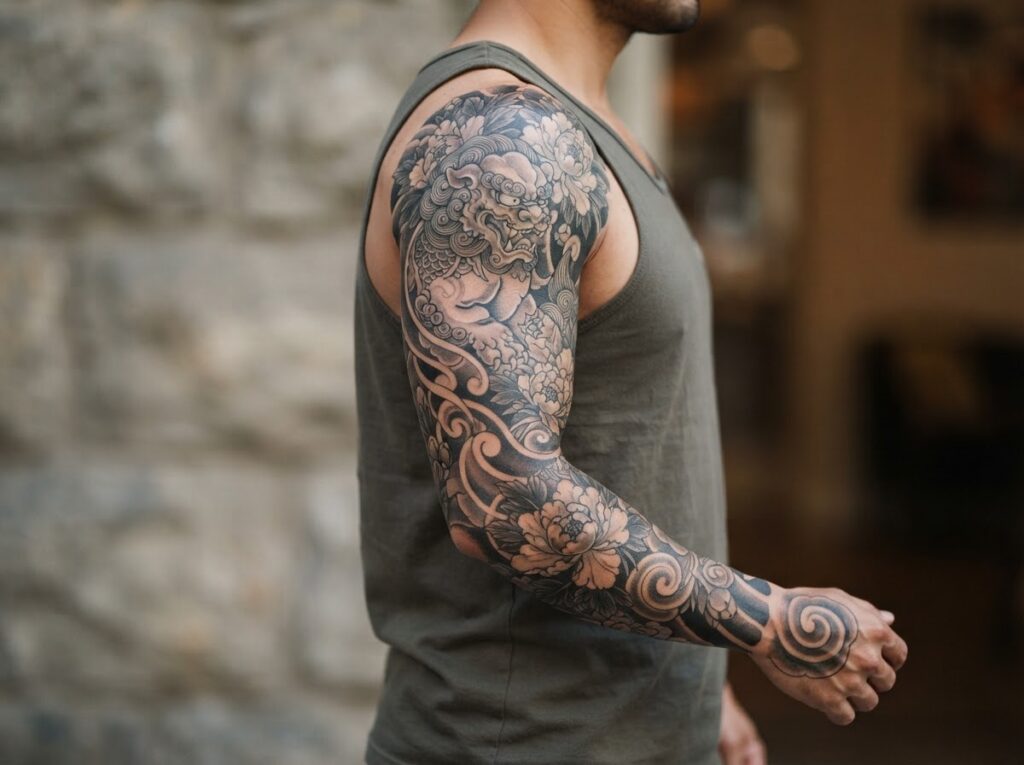
The foo dog, a lion guardian, protects homes and temples. Its curly mane and strong body fill this black and grey full sleeve.
9. Crane and Rising Sun
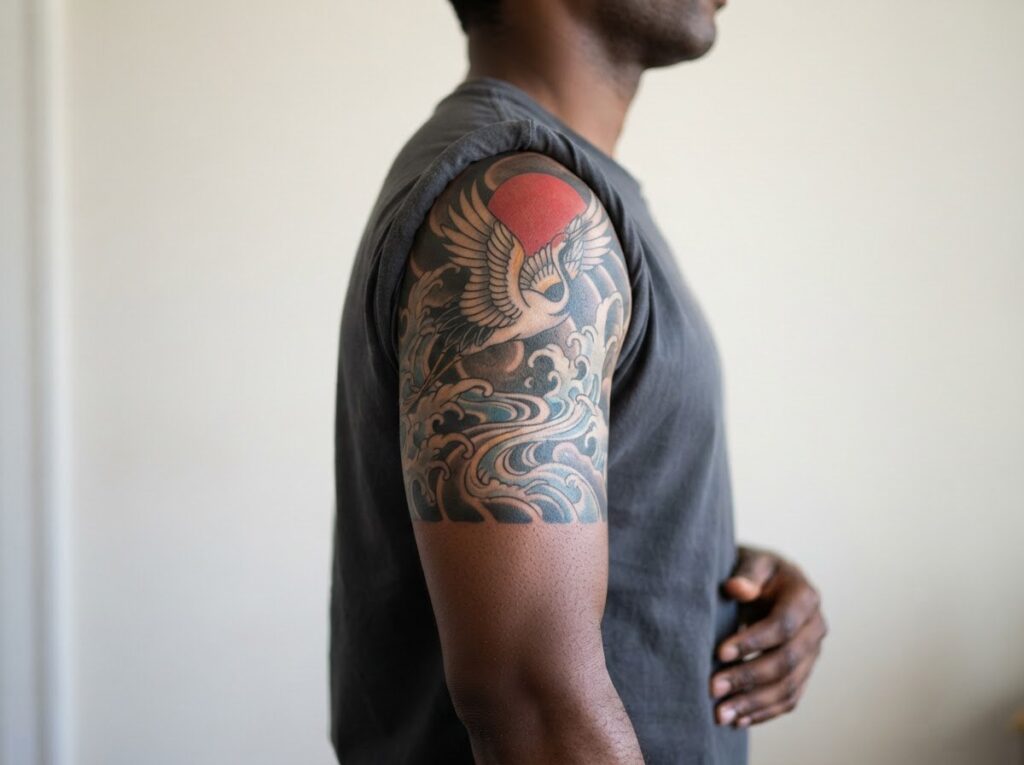
The crane stands for long life and good luck. A red sun disc and curling waves complete this graceful half sleeve.
10. Snake and Chrysanthemums
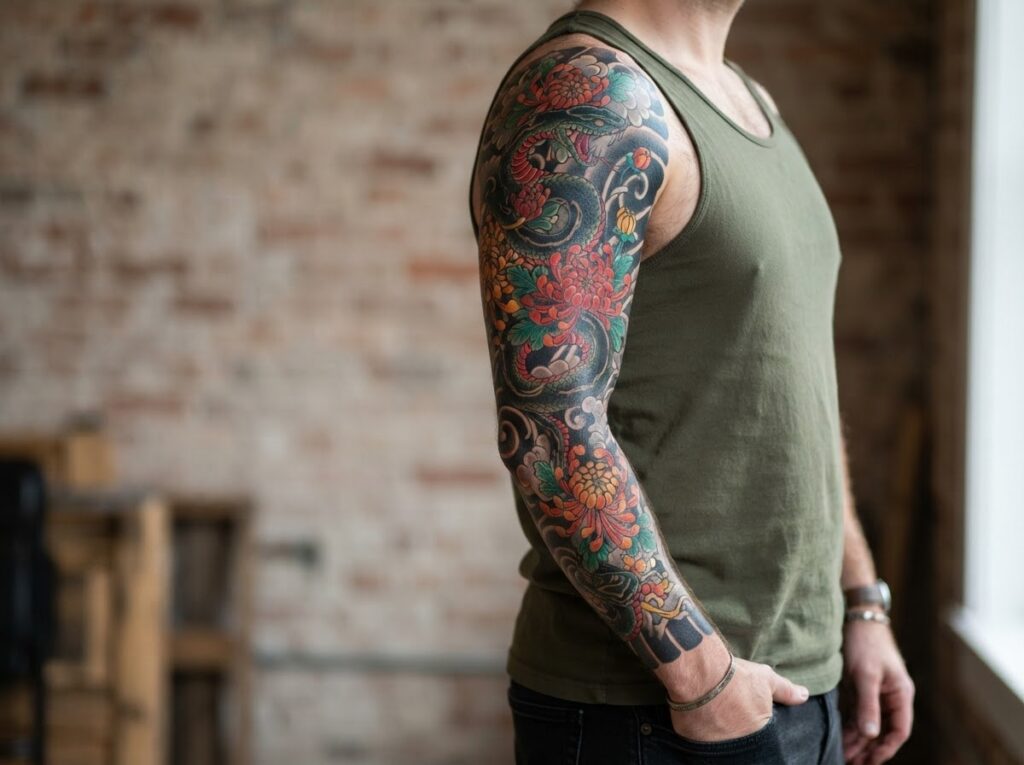
In Japan the snake protects against bad luck and sickness. Chrysanthemums, a symbol of long life, bloom along the full sleeve.
11. Great Waves Lower Sleeve
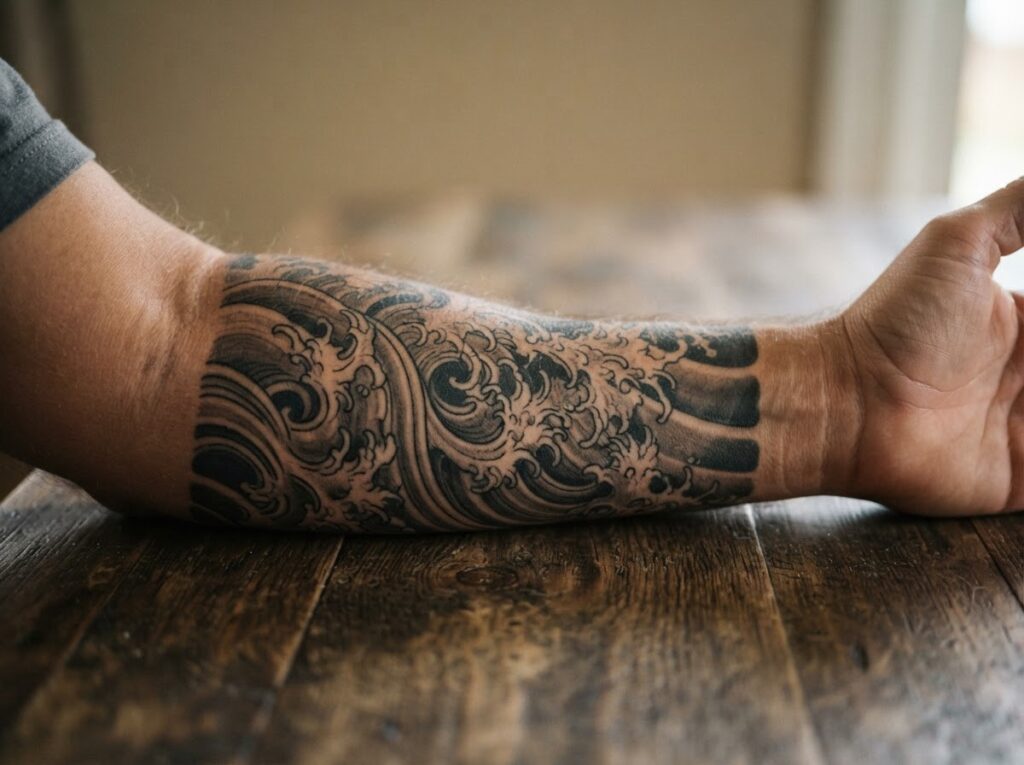
Waves stand for strength and the flow of life. A forearm of curling black and grey waves is a great first step that can later join a full sleeve.
12. Black and Grey Dragon Sleeve
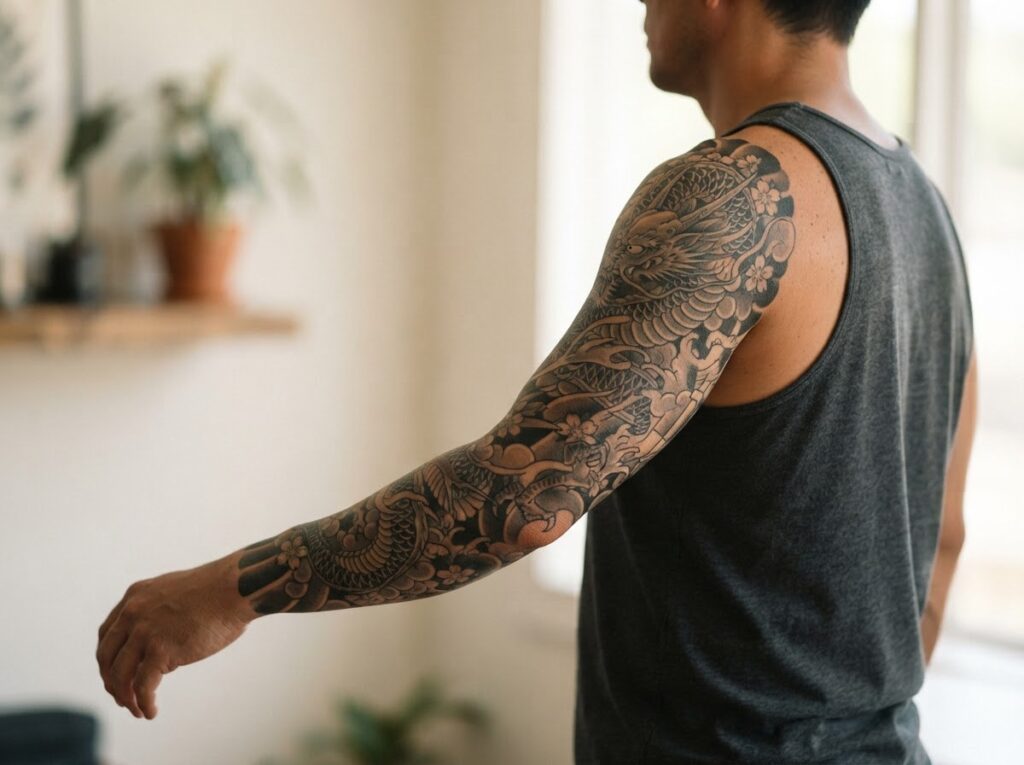
A dragon wrapping the whole arm through clouds and waves is one of the most dramatic Japanese sleeve tattoo drawings. Black and grey shading gives it a timeless feel.
Full Sleeve or Half Sleeve?
A full sleeve runs from the shoulder to the wrist and tells a complete story. A half sleeve covers the upper arm or the forearm and is easier to hide under clothing. Many people start with a half sleeve and extend it later, so plan Japanese sleeve tattoo drawings that leave room to grow. Browse our half sleeve tattoo drawings and mens sleeve tattoo drawings for more layouts.
How to Plan a Japanese Sleeve Drawing
- Choose one main subject: a koi, a dragon or a tiger should lead the design.
- Match the flowers: peonies, cherry blossoms or chrysanthemums support the meaning.
- Draw on an arm template: sketch on a tracing of the real arm, not a flat sheet.
- Follow the muscles: let the main body curve with the shoulder and forearm.
- Fill with background: wind bars, waves or clouds tie every element together.
Strong Japanese sleeve tattoo drawings use large, bold shapes. Small fussy details disappear on skin, while big scales, petals and waves stay clear for decades.
From Drawing to Finished Sleeve
Japanese sleeve tattoo drawings usually start as a rough plan drawn directly onto the arm with markers. The artist places the main subject first, then adds flowers and background so the flow works when you move. After that, the outline is tattooed in one or two long sessions.
Shading and color come next, often over many sessions spread across months. The black background is usually done last, because it frames everything and makes the colors glow. Patience pays off, since rushing a sleeve can lead to heavy healing and uneven color.
Keep your own reference simple. A few pictures of the subjects you love and a list of meanings help your artist build tattoo drawings that suit your arm.
Choosing the Right Placement
The outer arm is the best canvas for a Japanese sleeve, because it is wide, visible and fairly easy to tattoo. The inner arm and the elbow are more sensitive, so artists often fill them with simple background such as waves or wind bars. Many sleeves also stop at a clean line on the chest or the shoulder blade, which leaves space to connect a back piece later.
Think about your daily life too. A half sleeve on the upper arm hides under a t-shirt, while a lower sleeve on the forearm is on show most of the time. Decide how visible you want the work to be before the first line goes in, and tell your artist where the sleeve should end.
Japanese Sleeve Styles
- Traditional irezumi: bold outlines, strong color and black wind bars.
- Black and grey: the same motifs with smooth grey shading.
- Neo Japanese: brighter colors and more modern details.
- Minimal Japanese: lighter backgrounds with more open skin.
Frequently Asked Questions
How long does a Japanese sleeve take?
A full sleeve often needs 20 to 40 hours spread across many sessions. A half sleeve usually takes about half of that.
What is the best subject for a Japanese sleeve?
Koi, dragons, tigers and phoenixes are the classics. Choose the one whose meaning feels right to you.
Can I mix subjects in one sleeve?
Yes, but keep one main subject. Japanese sleeve tattoo drawings with too many large animals can look crowded.
Do Japanese sleeves have to be in color?
No. Black and grey Japanese sleeve tattoo drawings look just as strong and can be easier to touch up.
About These Images
The Japanese sleeve tattoo drawings shown in this article are design mockups created for Sketchy Colors with digital and AI tools, then reviewed by our team. They show how each design could look on the body. They are not photos of real client tattoos. Your tattoo artist should always create the final design for your body.